
Press review: EU fails to hinder Ukraine peace and China’s Foreign Minister visits Moscow
Top stories from the Russian press on Tuesday, December 2nd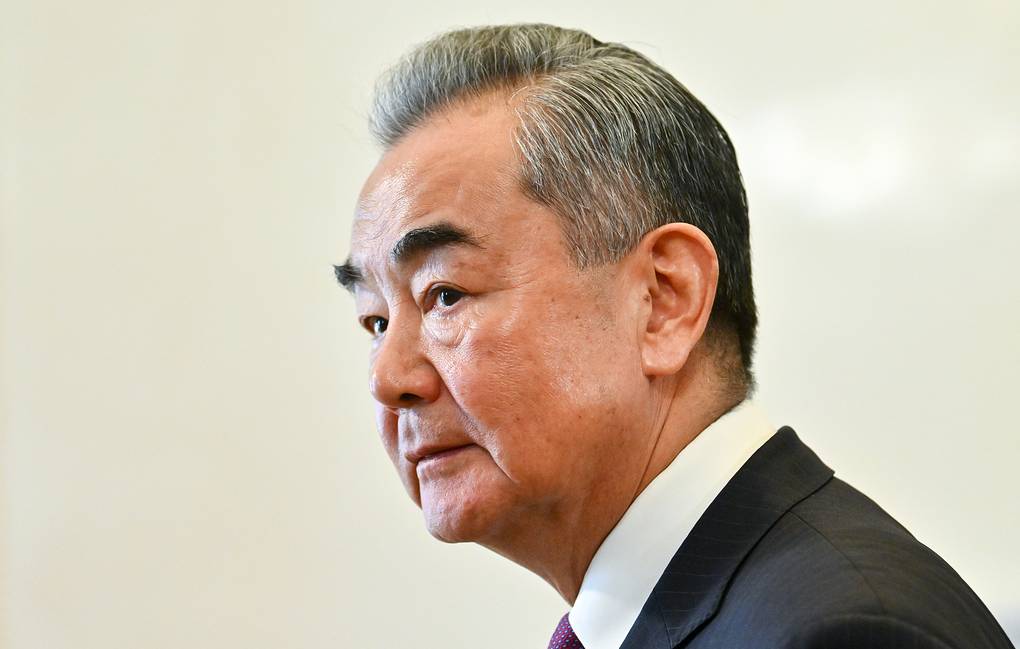 Chinese Foreign Minister Wang Yi
MOSCOW, December 2. /TASS/. Russia and the United States are moving ahead with talks on a Ukraine peace plan despite European efforts to obstruct the process, Russia-EU trade has dropped to a historic low as sanctions continue to dismantle long-standing economic ties, and China’s Foreign Minister Wang Yi has arrived in Moscow for a new round of strategic security consultations. These stories topped Tuesday’s newspaper headlines across Russia.
Izvestia: Europe’s attempts to block Ukraine settlement efforts crumble
A meeting between Russian President Vladimir Putin and US Special Representative Steve Witkoff to discuss the peace plan for Ukraine is scheduled for December 2. At this stage, neither Kiev nor the European capitals will be able to halt the settlement process, Deputy Chairman of Russia’s Federation Council Konstantin Kosachev told Izvestia. However, Brussels may well resort to provocations, the senator added. Against the backdrop of preparations for the Kremlin talks, Vladimir Zelensky visited France for the second time in two weeks. As the Russian Embassy in the country explained to Izvestia, the increased frequency of these visits is linked to Paris’s attempts to disrupt the peace process. Meanwhile, Kiev and Washington have discussed the "difficult points" of the agreement — the delegations met on November 30 in Florida, and according to media reports, there was a second round of talks as well.
"Under no circumstances can Ukraine halt this process. It has tried to do so before, and we know the outcome — it is absolutely negative in every respect. Therefore, God forbid that Europe should at some point develop the ambition to stop this process again," Konstantin Kosachev told Izvestia.
According to Kosachev, Europe does not understand what collective decision-making in the security sphere entails and insists that any steps in this area be taken "exclusively in the European way."
"And the European way is a dead end. And this dead end, if I am not mistaken, will be mirrored tomorrow (on December 2 during the meeting between Putin and Witkoff), when the Europeans once again commit some sort of provocation," Kosachev said.
On December 1, Vladimir Zelensky arrived in Paris — his second visit in just two weeks. Unsurprisingly, he and French President Emmanuel Macron discussed the same peace agreement, namely "the terms of a just and lasting peace" for Ukraine as a continuation of the Geneva talks.
"The increasingly frequent meetings between Emmanuel Macron and Vladimir Zelensky indicate that official Paris has not abandoned its attempts to derail the emerging process of peaceful settlement in Ukraine, which is taking shape in the format of Russian-American agreements," the Russian Embassy in France told Izvestia.
Izvestia: Russia-EU trade falls to 30.9 bln euro in early 2025 as sanctions sever economic ties
Russia-EU trade has fallen to a historic low, with mutual trade between the two sides dropping to 30.9 bln euro in January-June, down 8.3% from the same period in 2024, Russia’s Permanent Mission to the European Union told Izvestia. The Mission attributed the contraction to the EU’s sanctions policy against Russia, the bloc’s renunciation of Russian energy supplies, and the introduction of newly imposed customs tariffs targeting Moscow. Since the start of the special military operation, bilateral trade turnover has fallen by 74%, the diplomats noted.
EU sanctions have failed to cripple the Russian economy or to alter the situation on the battlefield in Ukraine in Kiev’s favor. At the same time, they have effectively erased nearly all trade connections between the region’s countries and Russia, the newspaper writes. Russia’s Permanent Mission to the EU stressed that Brussels has not merely frozen bilateral political dialogue and sectoral cooperation, but is continuing its efforts to comprehensively dismantle the foundations of the relationship that had been built over decades.
"According to the latest data from Eurostat, the statistical office of the European Union, Russia-EU trade dynamics in the first half of 2025 were negative. Russia-EU trade turnover over the six-month period decreased by 8.3% compared with the corresponding period of 2024, from 33.7 bln euro to 30.9 bln euro," the Russian diplomatic mission told Izvestia.
"This was the result of the EU’s anti-Russian sanctions, including bans on the supply of Russian oil and petroleum products, restrictions on gas deliveries, as well as the European Union’s quasi-sanctioned tariff measures, which envisage higher duties on the import of certain types of Russian goods. Unlike traditional sanctions packages, which require consensus, the adoption of such quasi-sanction measures requires only a qualified majority among EU member states," the Russian Mission to the EU noted.
Senior Research Fellow at the Institute for International Studies at MGIMO Egor Sergeyev recalls that for many years the EU’s competitiveness hinged in large part on relatively inexpensive Russian energy resources.
At the same time, Russia is successfully strengthening its foreign trade with friendly states and learning to navigate European restrictions with the help of partners, particularly within the CIS, experts emphasized.
Russia has learned to work around European export restrictions through "transit" countries such as the states of Central Asia. According to Sergeyev, Moscow is employing a fairly standard practice for states engaged in acute conflict: minimizing mutual trade and relying on the services of intermediaries.
Vedomosti: China’s Foreign Minister visits Moscow for strategic security talks
Director of the Chinese Communist Party (CCP) Central Committee Foreign Affairs Commission Office and the Minister of Foreign Affairs Wang Yi began his two-day visit to Russia on December 1. As announced by Xinhua, Wang Yi planned to travel to Moscow to participate in the next, 20th round of regular consultations on strategic security with Russian Security Council Secretary Sergey Shoigu. Experts interviewed by Vedomosti emphasized that Wang Yi’s visit fits into a long-standing strategic dialogue mechanism with Moscow, where Ukraine-related diplomacy and broader regional security issues — especially in Central Asia and the Middle East — are expected to play a major role.
Answering a question from Vedomosti on December 1, Russian presidential spokesman Dmitry Peskov said that the president currently has no plans to meet with Wang Yi this time: the head of state’s schedule is overloaded, "especially as Russian-Indian contacts at the highest level are planned for the second half of the week".
It is precisely in Wang’s capacity as Director of the Chinese Communist Party (CCP) Central Committee Foreign Affairs Commission Office that he serves as the established dialogue counterpart for the Russian Security Council secretary, Director of the Center for Comprehensive European and International Studies at the Higher School of Economics Vasily Kashin told Vedomosti. This format has existed for nearly two decades, and it is where the sides discuss key issues of international security. At the upcoming meeting, the topic of the negotiating process around Ukraine will, without doubt, be raised, along with the situation in Central Asia and the Middle East.
In February 2025, Shoigu made a special trip to China amid discussions about subsequent developments in the context of the then-new US President Trump’s arrival in office, Kashin believes. Overall, Shoigu is a highly important figure for the Chinese, enjoying their trust, in part because he actively promoted the development of relations with China during his tenure as defense minister.
Nezavisimaya Gazeta: Kiev debates strengthening Zaluzhny’s role as Zelensky seeks a successor to Yermak
"The system has collapsed," Kiev media remarked after Vladimir Zelensky was forced to dismiss his former presidential chief of staff Andrey Yermak following the corruption scandal. As a result, debate erupted not only over potential successors but also over the possibility of a broader reboot of parliament and the government — with some proposing that the popular former commander-in-chief of the Armed Forces of Ukraine Valery Zaluzhny be brought into power. Yet experts interviewed by Nezavisimaya Gazeta warned that despite the current euphoria surrounding Yermak’s removal, he may ultimately retain his former influence, albeit through more intricate arrangements.
Ukrainian journalists noted that Zelensky could make a decision on Yermak’s successor upon returning from France. Potential candidates for the position of head of the presidential office include Defense Minister Denis Shmygal, First Deputy Prime Minister Mikhail Fyodorov, head of the Main Intelligence Directorate of Ukraine’s Ministry of Defense Kirill Budanov (listed in Russia as a terrorist and extremist), and deputy head of the Presidential Office Pavel Palis.
According to Kiev political commentator Inna Vedernikova, Yermak’s resignation delivered a serious blow to the foundation of Zelensky’s power. Therefore, many believe that appointing a new chief of staff could mark the beginning of a reset of the entire system.
However, former deputy of Ukraine’s Verkhovna Rada Vladimir Oleinik told Nezavisimaya Gazeta observers should focus not on what Kiev says but on what it actually does. He noted that Yermak was dismissed of his own accord, not for any specific violations linked to the corruption case.
The expert expressed skepticism regarding the likelihood of any real reboot of the Verkhovna Rada. Under current conditions, he argued, it is pointless to expect meaningful renewal. "Moreover, the individuals named as potential replacements for Yermak belong to the same thieving group. And overall, current representatives of the Kiev authorities will do nothing that might harm them and will fight not for Ukraine but for their own personal well-being. Although representatives of the United States, it seems, will continue to pressure Kiev," he said.
Kommersant: Russia’s new visa-free regime for Chinese tourists expected to boost arrivals by up to 30% in 2026
The Russian government’s decision to abolish visas for tourists from China from December 1, 2025, could lead to a 15-30% increase in tourist arrivals as early as 2026. Experts interviewed by Kommersant predict that the positive effect will become noticeable in February, when China celebrates the Lunar New Year. China remains the leading source of inbound tourism to Russia, but this year the activity of travelers from the country has declined due to higher travel costs.
In 2026, the number of tourist arrivals from China to Russia may grow by 30% compared with 2025 thanks to the visa cancellation, Dmitry Gorin, vice president of the Russian Union of the Travel Industry, estimated. Visits to traditional tourist centers, he said, will increase by 20%, while cross-border tourist traffic will rise by 40%.
Sergey Romashkin, vice president of the Association of Tour Operators of Russia, offered a more modest forecast with year-on-year growth of around 15%. Under a favorable scenario, the increase could reach 30-40%, but several negative factors remain present, he noted.
Alexander Musikhin, CEO of the tour operator Intourist, expected the number of trips made by Chinese citizens as part of group tours to rise by 10-15%, while individual travel will grow by no less than 50%.
China leads all countries in terms of inbound tourist trips to Russia, but this year their number has declined. According to the FSB Border Service, Chinese citizens made 690,600 visits from January through September 2025. Year-on-year, the figure fell by 5.6%. According to Gorin, Chinese travelers are sensitive to external factors: during the first nine months of the year, Russia saw more than 500 instances of temporary airport operating restrictions. Also exerting negative influence, he says, are measures temporarily blocking foreign SIM cards. Travelers also continue to face difficulties paying for goods and services in Russia. At the same time, Romashkin suggested that demand from tourists from China may be constrained by rising travel costs.