Press review: Black Sea ceasefire efforts gain momentum as Houthi advances raise war risk
Top stories from the Russian press on Wednesday, October 7th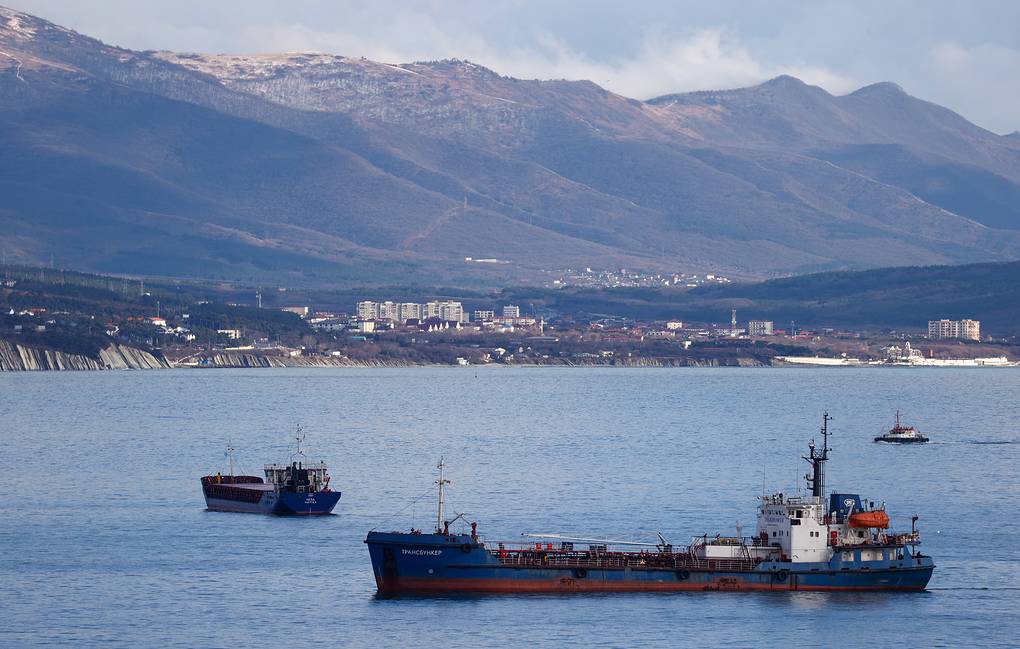
MOSCOW, October 7. /TASS/. Black Sea ceasefire efforts intensify amid escalating tensions; Russia is ready to help Afghanistan and Pakistan reconcile; and Houthi gains drive Saudi Arabia toward a major war. These stories topped Wednesday’s newspaper headlines across Russia.
Izvestia: Black Sea ceasefire efforts gain momentum amid escalating tensions
The security situation in the Black Sea is worsening. According to the International Maritime Organization, over 100 strikes on civilian ships have been recorded since June, which killed more than 30 seafarers, Izvestia notes.
Western media report that the United Nations and Turkey have launched new talks between Russia and Ukraine to discuss a Black Sea ceasefire. The organizers are reportedly working to increase efforts to protect grain supplies as global food prices are skyrocketing. The negotiations are scheduled for October. A UN official told Izvestia that the global body would welcome any agreement aimed at ensuring the safety of civilian shipping and grain exports.
Meanwhile, Ankara is seeking to apply direct pressure on Ukraine. In late September, Turkish President Recep Tayyip Erdogan met with Vladimir Zelensky on the sidelines of the UN General Assembly, stressing that attacks on commercial vessels in the Black Sea were unacceptable. Another country concerned about the deteriorating situation is India. On October 5, Indian Foreign Minister Subrahmanyam Jaishankar said that New Delhi was also holding talks with Russia and Ukraine to ensure the free passage of ships carrying grain and fuel.
However, Bogdan Bezpalko, a member of the Russian Presidential Council for Interethnic Relations, doubts that Turkey and India will be able to exert significant diplomatic or economic pressure on Ukraine. Ankara is strongly interested in further imports of Ukrainian goods, particularly grain, while New Delhi has neither geographic nor political ties to the Black Sea region. As for the United Nations, the analyst says that the organization has completely lost its real leverage and is only capable of making declarative statements.
It is the United States that could have a real impact on the situation. Notably, US President Donald Trump has repeatedly urged Kiev to halt strikes on Russian oil refineries. Still, regardless of its statements, Washington is either limited in its capabilities or has no real desire to put too much pressure on Kiev, particularly by threatening to cut Ukraine off from the Starlink satellite system or halt military supplies, Bezpalko noted.
Media: Russia ready to help Afghanistan, Pakistan reconcile
Western countries will not have a role in resolving the conflict between Afghanistan and Pakistan, Russian Special Presidential Envoy Zamir Kabulov told Izvestia. According to him, Moscow is ready to cooperate with its regional partners to reconcile Kabul and Islamabad, even though no contradictions were resolved at the recent meeting of the Moscow Format consultations on Afghanistan.
The conflict between Afghanistan and Pakistan is cyclical and a change of government does not change the situation, said Natalya Zamarayeva, senior researcher at the Russian Academy of Sciences’ Institute of Oriental Studies. She believes that Russia can effectively act as a mediator in the matter as Moscow is interested in stabilizing the situation. Moreover, both Kabul and Islamabad trust Russia and maintain contact with Moscow.
"The conflict is creating both a risk and an opportunity for Moscow as it highlights Russia’s irreplaceability as a platform for dialogue, while also limiting its room for maneuver because any final document of the Moscow Format would require the approval of both parties to the conflict," Middle East expert Oleg Akulinichev told Kommersant.
"The development of bilateral relations with Afghanistan is not a gesture of goodwill but a pragmatic response to three challenges that directly affect Russian interests," the analyst pointed out. The first is geopolitical competition, particularly with the United States, which continues to actively influence the region even after withdrawing its troops from Afghanistan. The second reason Akulinichev mentioned is security. Afghanistan remains the source of terrorist and drug threats to the entire Central Asian region and Russia, he explained. The third reason is the economy and transit routes. "The Afghan market is becoming an additional foothold in Central Asia for Russia amid Western sanctions, although it cannot compare with other key partners," the expert said. By developing relations with Kabul, Moscow is strengthening its long-term presence in the region, where competition for influence is only growing, the expert concluded.
Izvestia: Houthi advances raise risk of major war for Saudi Arabia
Yemeni Houthis from the Ansar Allah movement and Saudi Arabia are stepping up strikes against each other. What sparked the escalation was an operation launched by Yemen’s central government to defeat the movement. However, the operation has so far failed to produce the desired results as government forces, after retaking several areas around the strategically important Bab el-Mandeb Strait, suffered a string of defeats.
Saudi Arabia’s allies Turkey and Pakistan plan to deploy troops to the country in order to contain the Houthis, creating the risk of a broader conflict. Still, no major war should be expected in the region for now, experts interviewed by Izvestia said.
Political scientist Adwan Hisham says the Houthis hardly seek to take control of all of Yemen. It is far more important for them to move closer to the capital, Aden, where the Presidential Council’s institutions are based, set up a presence under their flag, and force the central government to abandon attempts to change the status quo by force for fear of facing an ultimate defeat, the expert explained.
As for the United States, its position on the Yemen crisis has not changed much. US Secretary of State Marco Rubio said on October 5 that Saudi Arabia had the right to defend itself against Houthi attacks and that Washington intended to uphold defense and security agreements with Riyadh, particularly by providing intelligence to the country’s armed forces. Meanwhile, Washington continues to avoid direct involvement in military operations. Political scientist Dastan Tokoldoshev explained that such caution resulted from an unwillingness to become more deeply engaged in the regional conflict.
"It certainly does not mean that the United States is fully abandoning support for its allies among the Gulf monarchies but the White House is now acting in a more restrained manner. This is because of changes in both the regional balance of power and security priorities. Besides, the Iran operation has also affected US tactics by leading to significant reputational, economic, military and strategic costs. Washington does not want another ‘big war’ in the Middle East," the expert stressed.
Media: Separatists win Quebec provincial elections
The Parti Quebecois (PQ), a political party that advocates the independence of Canada’s French-speaking province of Quebec, has won a provincial legislature election. PQ’s program includes cutting government spending, easing the tax burden, reducing immigrant quotas, bolstering the status of the French language, and reducing ties with the British monarchy. Its main goal is to achieve independence and lay the groundwork for a referendum on the issue, Vedomosti writes.
Despite winning the election to the provincial legislature, the party will not be able to form a majority government in Quebec, said Artur Demchuk, deputy head of the Department of Comparative Politics at Moscow State University and a leading researcher at the Russian Academy of Sciences’ Institute for US and Canadian Studies. According to him, other parties in Quebec don’t support the idea of withdrawing from Canada and are unlikely to work with PQ leader Paul Plamondon.
Various estimates show that about 30% of Quebec’s population, mostly French-speaking people, support separatist ideas, the political scientist noted. "A referendum on Quebec’s secession is possible in theory. However, those supporting the initiative will definitely fail to secure more than 50% of the vote. Especially in a situation where Donald Trump is pledging to turn Canada into the 51st US state and is taking measures to exert economic pressure on Ottawa," Demchuk said.
In his opinion, Plamondon seeks to use separatist rhetoric to pressure Ottawa into granting additional rights to the province. Separatist sentiment in Quebec could rise only if locals come to see their economic situation as part of Canada as unfair, Demchuk pointed out. "Unless the central government adopts a policy of discriminating against the French language and culture, Quebecers won’t have any economic reason to leave Canada," the analyst explained.
Meanwhile, Plamondon maintains a tough stance against Russia. However, his attitude to Moscow is not more radical than that of officials in the central government. Support for Ukraine and sanctions against Russia has in fact become a point of consensus among Canada’s political forces, Demchuk stressed in a conversation with Izvestia.
Vedomosti: Analysts forecast increase in Russian gas export price
The average export price of Russian pipeline gas will rise by 19.5% in 2026 from the previous year, reaching $312 per 1,000 cubic meters, Vedomosti reports, citing a review by the Center of Price Indexes based on a consensus forecast from Russia’s think tanks.
Ongoing political and military tensions in the Middle East and the limited gas reserves in the European Union’s underground storage facilities are what prompted a revision of Russian gas prices, as well as prices in Europe and Asia, the review says. Earlier, the blockade of the Strait of Hormuz resulted in higher oil and oil product prices, on which the price of Russian gas in long-term contracts depends, and also drove gas prices up on the global market.
Analysts expect a considerable rise in Russian liquefied natural gas (LNG) exports amid the conflict in the Middle East. According to the consensus forecast, supplies will grow by 12% from the previous year to 50 billion cubic meters. Russian pipeline gas exports will reach 118 billion cubic meters in 2026, up 3% from 2025, analysts predict.
Developments in the Middle East will remain the key factor affecting export prices, Aricapital Investment Strategist Sergey Suverov pointed out. The situation at Europe’s underground gas storage facilities will also continue to influence prices, Yekaterina Krylova, managing expert at the PSB Center of Expertise and Analytics, said.
In 2027, Russian gas export prices will depend on the extent to which logistics chains are restored, Suverov believes. If the conflict in the Middle East is resolved, prices may fall. However, Krylova does not expect a significant decline in prices. The planned launch of major gas liquefaction facilities in the United States and Qatar will be an important factor, she noted. Finam analyst Sergey Kaufman expects average gas prices to reach $305 per 1,000 cubic meters in 2027, citing continuing uncertainty over oil and LNG supplies through the Strait of Hormuz.