Press review: Putin V-Day speech gives life to Ukraine peace and Iran’s new superweapon
Top stories from the Russian press on Tuesday, May 12th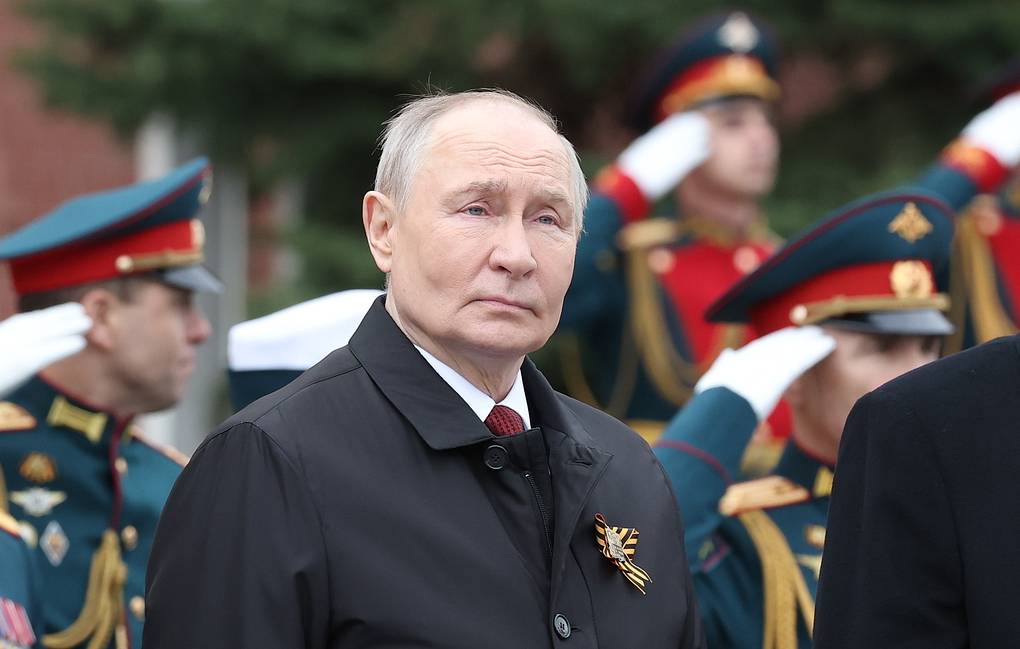
MOSCOW, May 12. /TASS/. Russia doubts Europe's sincerity on Ukraine diplomacy even as new talks are floated, as it warns Franco-German nuclear cooperation could trigger a military response. Meanwhile, Iran is using control of the Strait of Hormuz as a powerful new strategic lever. These stories topped Tuesday's headlines in Russia.
Izvestia: Putin's Victory Day Speech reinvigorates Ukraine peace efforts
Efforts to resolve the Ukraine conflict may resume soon. Against this background, activity in the EU has intensified as the bloc has already announced preparations for talks with Russia. Moscow is still ready for dialogue with Brussels, even as it has not seen any change in approaches on the part of Europe toward reaching any agreements, the Russian Foreign Ministry told Izvestia. The recent visit to Kiev of the German defense chief, Boris Pistorius, who discussed strengthening military support for the Ukrainian regime serves as a confirmation of this belief. Meanwhile, Russian President Vladimir Putin stated on May 9 that the conflict was nearing an end and even said he could meet with Vladimir Zelensky on neutral ground. Against this backdrop, US President Donald Trump announced that he plans to send his negotiators to Moscow.
Special military op nearing completion, POW exchange stalled: Putin’s statements
On May 7, European Council President Antonio Costa said he was consulting with all 27 EU leaders about how best to begin the negotiation process with Putin.
However, there is no reason to believe that European politicians are ready for any kind of compromise, Russian Foreign Ministry’s Ambassador-at-Large, Rodion Miroshnik, told Izvestia. "The president has said that Russia is ready to consider pertinent proposals. But that does not mean that we will agree to any proposal though. The EU and the Europeans have concealed their ambitions to undermine the Russia-US talks behind their verbal manipulations," the Russian diplomat said.
Who will voice a proposal matters, too, and, as an official, the EC president is a position lacking clout, and therefore Costa is not a politician who can force everyone else to go and negotiate with Russia, noted Yegor Sergeyev, a senior researcher at the Institute of International Studies of the Moscow State Institute of International Relations (MGIMO). "The EU has created such a superstructure of anti-Russian measures and tools that it will be impossible to dismantle it in the next few years, even if we surmise that negotiations will start tomorrow. And with all its actions, including military, financial, infrastructural and logistical support to Ukraine, the EU shows that it is not going to abandon its anti-Russian views," Sergeyev argued.
Meanwhile, the European Commission expects to send the first tranche of a €90 billion loan to Ukraine next week, Commissioner for Enlargement Marta Kos announced ahead of an EU Foreign Ministers’ meeting. "Obviously, statements about the desire to engage with Russia will not be enough to reach an agreement," Miroshnik concluded.
Izvestia: Russia rings alarm bells amid budding Germany-France nuclear axis
The Franco-German nuclear partnership could pose a direct strategic threat to Russia, Russian Ambassador to Berlin Sergey Nechayev told Izvestia. According to him, Moscow should consider the interaction between the two countries in its military and political planning. Earlier, Berlin and Paris established a high-level steering group on nuclear cooperation.
Russian ambassador to Germany points to Europe’s growing militarization
Cooperation between Paris and Berlin in the sphere of nuclear and strategic deterrence further down the road would strengthen their joint capabilities both as regards launching strikes inside Russia and reducing the effectiveness of retaliatory or preventive Russian actions, Dmitry Stefanovich, a researcher with the Center for International Security at the Russian Academy of Sciences’ Institute of World Economy and International Relations, told Izvestia. "We are talking not only about the possible deployment of French nuclear weapons carriers in Germany, but also about cooperation in the field of non-nuclear precision long-range weapons, missile and air defense, and space war capabilities," the expert added. According to Stefanovich, the plans by Berlin and Paris will require a response both at the level of planning and a deployment of additional offensive and defensive weapons, primarily across the Leningrad Military District.
Tigran Meloyan, an analyst with the Center for Mediterranean Studies at the Higher School of Economics, said in an interview with Izvestia that, as a response, Russia may revisit plans in the field of strategic deterrence that would have it expand its own capabilities to overcome European missile defenses as well as redeploy and increase the number of nuclear warheads designed to hit targets in the European direction. "The problem facing Russia requires a comprehensive approach, therefore, taking into account the capabilities of the United States, France, Great Britain and Germany to create a broader ecosystem at NATO targeting Russia is the only correct solution for today," the expert believes.
Among other response options, Russia could deploy more Oreshnik missile systems in Belarus, strengthen its air and missile defense capabilities, and revise its nuclear doctrine.
Kommersant: Control of Hormuz becomes Iran’s new superweapon
Iran has discovered that exercising control over the Strait of Hormuz, one of the world’s largest waterways, is the best geopolitical tool to deter its adversaries. It's worth noting that the Iranians had threatened to block it during previous conflicts, but they decided to completely shut down this trade route only after the recent aggression by the US and Israel, which has led to global economic upheaval. Now that Iran has seen how effective this tool is during wartime, it is seeking to secure the right to use it in peacetime as well.
No alternatives to Iran’s 14-point proposal for deal with US — top lawmaker
"Today, the Strait of Hormuz fully belongs to the great people of Iran, and not a single vessel or oil tanker will pass through it without the permission of the Islamic Republic," Haji Babaei, Iran’s deputy parliament speaker, stated on May 10. Control of the Strait, though which more than 20% of global oil, petroleum and LNG supplies passed before February 28, he said, has made Iran "the fourth-largest superpower" after Russia, the US, and China.
Adlan Margoyev, a research fellow at the Center for Middle East and Africa Studies at Moscow State Institute of International Relations, told Kommersant that previously Tehran had mostly relied on its defense, primarily missile capabilities and its regional allies, including Syria, Hezbollah, Hamas, and the Houthis, as it hoped that taken together, that would be enough for effective deterrence. "Neither instrument had helped to prevent the two major US-Israeli aggressions (the latest one and the original 12-day operation — Kommersant)," the expert said. "Rather than weaponizing its nuclear program, that is building a nuclear bomb, Iran escalated by launching strikes on the infrastructure of US allies in the Persian Gulf and closing the Hormuz Strait," he explained.
According to Dmitry Trenin, president of the Russian International Affairs Council, control of the entrance to the Persian Gulf has given Tehran what a nuclear weapon failed to give — a flexible instrument of leverage on the United States and its allies via the closure of this all-important oil and gas supply route. "The Iranian leadership has been acting boldly, without resorting to mirror actions, by targeting the enemy’s most vulnerable points — not only military, but also economic and political. Well, we could learn something from them," he told Kommersant.
Even as the United States and Gulf countries have attempted to challenge Iran’s claims to the Strait, including at the UN Security Council as they recently submitted yet another draft resolution on freedom of navigation in the region, the balance of forces on the ground has so far been key. Last week, US President Donald Trump announced Operation Project Freedom to escort merchant ships, an initiative that the US itself has abandoned quickly.
Media: Globe feels effects of oil shock, Russia too
A 12% decline in global oil supplies to end consumers risks triggering a similar drop in the use of energy globally, with approximately one in eight flights being cancelled and one in eight cars being left without fuel, Nezavisimaya Gazeta wrote. Some Asian governments have urged their citizens to use public transportation only or are preparing gasoline rationing. In Europe, airlines are planning to cancel more than 20,000 flights. Russia, too, has been affected by falling oil production. Meanwhile, only the United States, as the world’s largest oil supplier, has been increasing oil and petroleum production and exports.
Russia is trying to establish a new system for regulating domestic fuel supplies amid a spike in oil prices and Ukrainian attacks on fuel infrastructure across the country. The Russian Energy Ministry is still negotiating contracts with oil companies on domestic fuel supplies, and work in this field is ongoing, Russian Deputy Prime Minister Alexander Novak said on Saturday. "The Energy Ministry is currently working with [oil] companies to sign an agreement," he said.
"Meanwhile, prospects for increasing physical export volumes have remained weak amid extraordinary infrastructure maintenance and other logistical challenges. Against this backdrop, even as oil producers’ expectations regarding output and demand remain positive, they have not adjusted their production plans yet," the Central Bank of Russia said in a report.
On Sunday, Saudi Aramco CEO Amin Nasser called the current energy crisis the worst ever. Aramco has warned of "long oil market disruption." The longer the Strait of Hormuz remains shut, the heavier the consequences will be for the global economy, Nasser explained.
As regards Russia’s Urals blend, in the best-case scenario, its average annual price will be at least $80 per barrel, with the country’s annual oil and gas revenues reaching about 11 trillion rubles ($149 billion), or more than 2 trillion rubles above plan, Olga Belenkaya, head of macroeconomic analysis at Finam, explained to Izvestia. For this scenario to materialize, Urals should trade at least at $90 per barrel for the rest of 2026, the analyst said.
Rossiyskaya Gazeta: What rising global food prices mean for Russian exports
Global food prices rose again in April, with wheat reaching its highest marker since last summer amid weather risks facing the largest exporters and a rise in vegetable oil prices. This situation has propped up Russian grain and fertilizer exports.
"The exchange and physical wheat markets are strengthening, supported by weather factors," Rusagrotrans noted. Analysts highlighted a severe drought in the US, deteriorating crop conditions in France, and the risk of an El Nino — a natural phenomenon associated with abnormally warm waters in the Pacific — forming, which may cause drought in Australia and Brazil.
Meanwhile, Russian grain exports have remained high. According to preliminary data from Rusagrotrans, Russia exported almost 3.95 million metric tons of wheat last month, or 1.65 times more than a year ago. In May, wheat exports are expected to reach some 2.5 million metric tons, also above the 2025 level, despite a seasonal decline in importers’ activity.
The Food and Agriculture Organization (FAO) has warned that rising gas prices and logistics costs have been pushing global fertilizer prices higher which may lead to reduced fertilizer use in a number of countries and worsen harvest prospects next season. For Russia as a leading global mineral fertilizer exporter this situation means that external demand will stay strong.